
Producción de hidrógeno a partir del bagazo de caña de azúcar (Saccharum officinarum L.): una revisión
Barra lateral del artículo




Contenido principal del artículo
Resumen
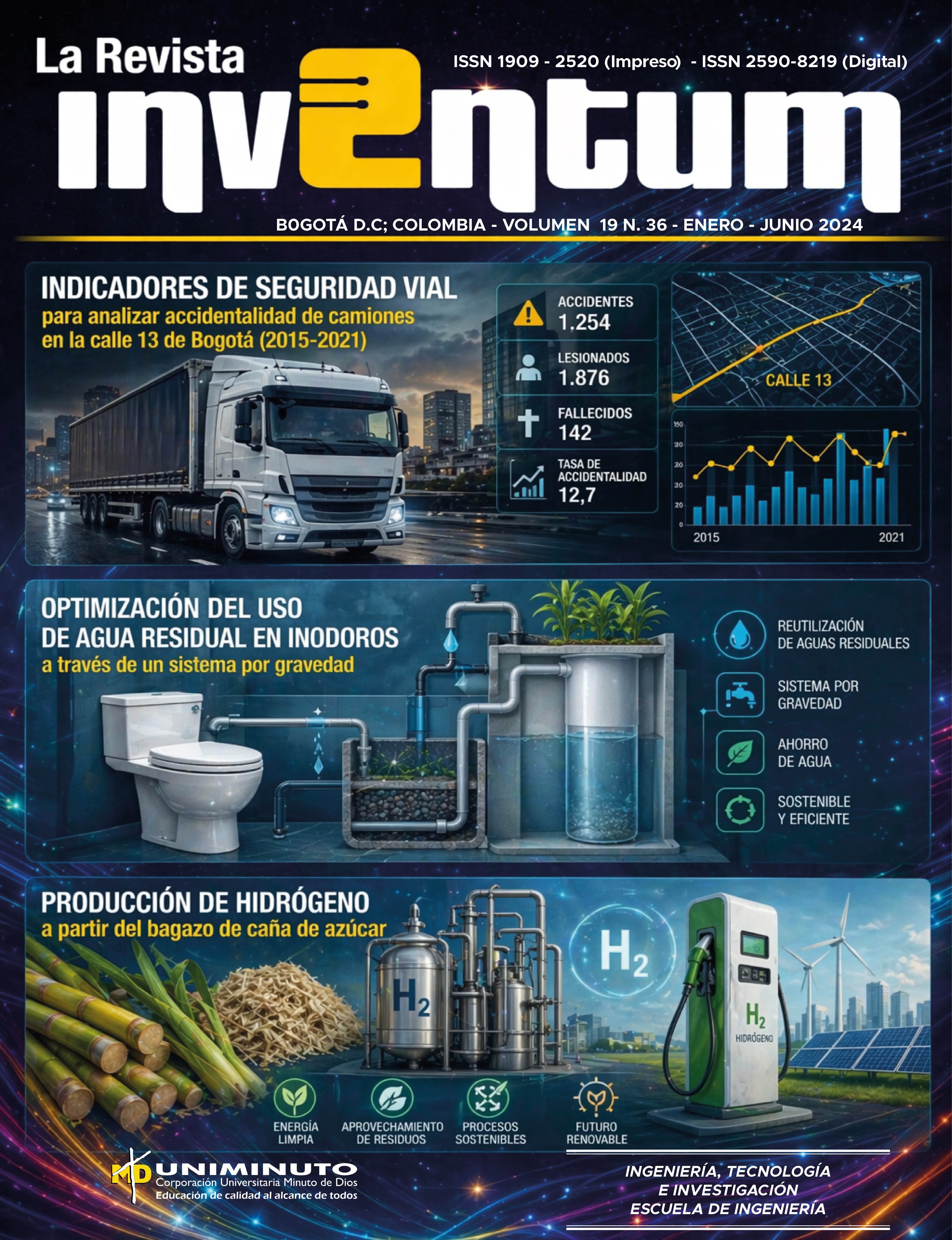
El bagazo de caña de azúcar (Saccharum officinarum L.) es una fuente de biomasa muy importante, ya que puede ser aprovechada de muchas formas en la industria. Así, mediante un proceso de molienda del bagazo y a través de la fermentación oscura, se puede obtener biohidrógeno utilizando microorganismos anaerobios. El hidrógeno, considerado un portador energético y alternativa progresiva a los combustibles fósiles, se analiza desde la perspectiva de los recursos y energías renovables, el abastecimiento energético y la sostenibilidad ambiental. El objetivo es evaluar su viabilidad como vector en la transición energética, mediante una metodología de revisión, articulando los ejes temáticos con la problemática del hidrógeno.
Detalles del artículo
Sección
Se solicita a los autores que diligencien el documento de cesión de derechos de autor sobre el artículo, para que sea posible su edición, publicación y distribución en cualquier medio y modalidad: medios electrónicos, CD ROM, impresos o cualquier otra forma, con fines exclusivamente científicos, educativos y culturales
- La obra pertenece a UNIMINUTO.
- Dada la naturaleza de UNIMINUTO como Institución de Educación Superior, con un modelo universitario innovador para ofrecer Educación de alta calidad, de fácil acceso, integral y flexible; para formar profesionales altamente competentes, éticamente responsables y líderes de procesos de transformación social, EL CEDENTE ha decidido ceder los derechos patrimoniales de su OBRA, que adelante se detalla para que sea explotado por ésta
- El querer de EL CEDENTE es ceder a título gratuito los derechos patrimoniales de la OBRA a UNIMINUTO con fines académicos.
Cómo citar
Referencias
[1] O. Edenhofer, R. Pichs-Madruga, Y. Sokona, K. Seyboth, P. Matschoss, S. Kadner, T. Zwickel, P. Eickemeier, G. Hansen, S. Schlömer, y C. von Stechow, “Informe especial sobre fuentes de energía renovables y mitigación del cambio climático”, Grupo Intergubernamental de Expertos sobre el Cambio Climático, Rep. 978-92-9169-331-3, 2011. [Online]. Disponible en: https://www.ipcc.ch/site/assets/uploads/2018/03/srren_report_es-1.pdf
[2] D. Y. Cano, E. L. Moreno, “Incidence of operative parameters in the production of biohydrogen generated from urban organic waste”. Revista Facultad Nacional de Agronomía Medellín, vol. 72(2), pp. 8841-8853, 2019.
[3] J. A. Sandoval y O. Castiblanco, “Revisión del potencial de obtención de biohidrógeno a partir de microalgas en Colombia”. Entre Ciencia e Ingeniería, vol. 16(32), pp. 9-15, 2022.
[4] PROCAÑA, Asociación Colombiana de Productores y Proveedores de Caña de Azúcar, “Historia de la caña de azúcar”. [Online]. Disponible en: https://members.tripod.com/jas_multimedia_prod/procana/canazuc.htm#:~:text=La%20ca%C3%B1a%20de%20az%C3%BAcar%20se,precipitaci%C3%B3n%20y%20calidad%20de%20suelos
[5] FINAGRO, Fondo para el desarrollo del sector agropecuario, “Ficha de inteligencia caña de azúcar”. [Online]. Disponible en: https://www.finagro.com.co/sites/default/files/node/basic-page/files/ficha_cana_de_azucar_version_ii.pdf
[6] A. Villarroel, “Aplicación de técnicas para la clarificación del jugo de caña (Saccharum officinarum) como mejorador de sus características organolépticas”. Tesis de grado, Universidad Técnica de Ambato, 2006.
[7] Caracol TV, “Caña de azúcar, el gran motor de la economía en el Valle del Cauca”. Noticia, 21 de julio, 2017. [Online]. Disponible en: https://noticias.caracoltv.com/valle/cana-de-azucar-el-gran-motor-de-la-economia-en-el-valle-del-cauca
[8] ECURED, “Bagazo de caña”. [Online]. Disponible en: https://www.ecured.cu/Bagazo_de_caña#:~:text=Además%20su%20composición%20qu%C3%ADmica%20es,Ox%C3%ADgeno:%2044%20%25
[9] A.V. Bridgwater, D. Meier, and D. Radlein, “An overview of fast pyrolysis of biomass”. Organic Geochemistry, vol. 30, pp. 1479-1493, 1999.
[10] C. Sanchez, “Lignocellulosic residues: Biodegradation and bioconversion by fungi”. Biotechnology Advances, vol. 27(2), pp. 185-194, 2009.
[11] A.B. Demirbas “Biorefineries: For Biomass Upgrading Facilities”. Springer, 2010.
[12] A. Carvajal, “Energía: la nueva agenda del sector azucarero”. Asocaña: Sector agroindustrial de la caña. [Online]. Disponible en: https://www.asocana.org/StaticContentFull.aspx?SCid=167
[13] M. Bustos et al., “Residuos de la industria azucarera: una alternativa para la obtención de ácido láctico”. CienciaUAT., vol. 5(4), pp. 44-61, 2011.
[14] UNL, “Buscan producir biohidrógeno a partir de residuos agrícolas”. Noticia, 13 de marzo, 2017. [Online]. Disponible en: https://www.unl.edu.ar/noticias/news/view/buscan_producir_biohidr%C3%B3geno_a_partir_de_residuos_agr%C3%ADcolas#.Ylmwj-jMLIU
[15] Y. H. Zhang, and L. R. Lynd, “Toward an aggregated understanding of enzymatic hydrolysis of cellulose: Noncomplexed cellulase systems”. Biotechnology and Bioengineering, vol. 88(7), pp. 797-824, 2004.
[16] M. J. Taherzadeh, and K. Karimi, “Pretreatment of lignocellulosic wastes to improve ethanol and biogas production: A review”. International Journal of Molecular Sciences, vol. 9(9), pp. 1621-1651, 2008.
[17] N. Mosier, et al., “Features of promising technologies for pretreatment of lignocellulosic biomass”. Bioresource Technology, vol. 96(6), pp. 673-686, 2005.
[18] I. López, “Producción de hidrógeno a partir de hidrolizados de bagazo de Agave tequilana Weber var. azul: efecto del procesamiento de la piña y de la sacarificación del bagazo”. Tesis de maestría. IPICYT, México, 2015.
[19] E. L. N. Dzulkarnain, et al., “Microbiomes of biohydrogen production from dark fermentation of industrial wastes: current trends, advanced tools and future outlook”. Bioresources and Bioprocessing, vol. 9(1), pp. 16, 2022.
[20] A. C. Chang et al., “Hydrogen production by the anaerobic fermentation from acid hydrolyzed rice straw hydrolysate”. International journal of hydrogen energy., vol. 36(21), pp. 14280-14288, 2011.
[21] Z. Chen, et al., “Metabolic engineering of Klebsiella pneumoniae for the de novo production of 2-butanol as a potential biofuel”. Bioresource Technology, vol. 197, pp. 260-265, 2015.
[22] C. Ballardo, “Valorización de residuos sólidos orgánicos como sustrato para el crecimiento de bacillus thuringiensis mediante fermentación en estado sólido: aplicación a la fracción orgánica de residuos municipales para la producción de compost con efecto biopesticida”. Tesis doctoral, Universidad Autónoma de Barcelona, España, 2016.
[23] S. Blanco y T. Rodríguez, “Producción de biohidrógeno a partir de residuos mediante fermentación oscura: una revisión crítica (1993-2011)”. Revista Chilena de ingeniería., vol. 20(3), pp. 398-441, 2012.
[24] K.Y. Show, D.J. Lee and J.S. Chang, “Bioreactor and process design for biohydrogen production”. Bioresource Technology., vol. 102(18), pp. 8524-8533, 2011.
[25] A. Bisaillon, J. Turcot and PC. Hallenbeck, “The effect of nutrient limitation on hydrogen production by batch cultures of Escherichia coli”. International Joumal of Hydrogen Energy., vol. 31(11), pp. 1504-1508, 2006.
[26] J. Wang and W. Wan, “Factor influencing fermentative hydrogen production: a review”. International Journal of Hydrogen Energy., vol. 34(2), pp. 799-811, 2009.
[27] C.Y. Lin and C.H. Lay, “A nutrient formulation for fermentative hydrogen production using anaerobic sewage sludge microflora”. International Journal of Hydrogen Energy., vol. 30(3), pp. 285-292, 2005.
[28] C. Contreras. “Producción de hidrógeno en sistemas continuos a partir de hidrolizados enzimáticos de bagazo de Agave tequilana Weber”. Tesis de grado. IPICYT, México, 2015.
[29] S.I. Maintinguer et al., “Fermentative hydrogen production with xylose by Clostridium and Klebsiella species in anaerobic batch reactors”. International Journal of Hydrogen Energy., vol. 36(21), pp. 13508-13517, 2011.
[30] A. Khalifa, “Enterobacter”. Benef. Microbes Agro-Ecology, pp. 259-270, 2020.
[31] V. Martinez y R. García, “Fermentación oscura, fotofermentación y biofotólisis: análisis de su aplicación en secuencia para la producción de hidrógeno biológico”. Dirección General de Investigación y Desarrollo Armada Argentina., vol. 7, 2010.
[32] Y. Shi et al., “Klebsiella”. Benef. Microbes Agro-Ecology, pp. 233–257, 2020.
[33] B. Gopalakrishnan, N. Khanna, and D. Das, “Dark-Fermentative Biohydrogen Production”. Biohydrogen., pp. 79-122, 2019.
[34] A. Davin-Regli and J. M. Pagès, “Enterobacter aerogenes and Enterobacter cloacae; versatile bacterial pathogens confronting antibiotic treatment”. Frontiers in microbiology., vol. 6, p. 392, 2015.
[35] N. Khanna et al., “Improvement of biohydrogen production by Enterobacter cloacae IIT-BT 08 under regulated pH”. Journal of Biotechnology., vol. 152(1-2), pp. 9-15, 2011.
[36] R. Ramachandran and R. K. Menon, “An overview of industrial uses of hydrogen”. International journal of hydrogen energy., vol. 23(7), pp. 593-598, 1998.
[37] J. Wang and Y. Yin, “Clostridium species for fermentative hydrogen production: an overview” International journal of hydrogen energy., vol. 46(70), pp. 34599-34625, 2021.
[38] N. Cassir, S. Benamar, and B. La Scola, “Clostridium butyricum: from beneficial to a new emerging pathogen”. Clinical Microbiology and Infection., vol. 22(1), pp. 37-45, 2016.
[39] P. Dias, P. Moura and C. de Carvalho, “Hydrogen production by Clostridium butyricum: improving production yields and assessing changes in the cell lipid profile during adaptation to furans and gallic acid”. November, 2015.
[40] D. Szymanowska-Powałowska, D. Orczyk, and K. Leja, “Biotechnological potential of Clostridium butyricum bacteria”. Brazilian Journal of Microbiology., vol. 45(3), pp. 892-901, 2014.
[41] N. Srivastava et al., “Efficient dark fermentative hydrogen production from enzyme hydrolyzed rice straw by Clostridium pasteurianum (MTCC116)”. Bioresource technology., vol. 238, pp. 552-558, 2017.
[42] J. Masset et al., “Fermentative hydrogen production from glucose and starch using pure strains and artificial co-cultures of Clostridium spp.”. Biotechnology for biofuels., vol. 5(1), pp. 1-15, 2012.
[43] M. Gomez-Flores, G. Nakhla, and H. Hafez, “Hydrogen production and microbial kinetics of Clostridium termitidis in mono-culture and co-culture with Clostridium beijerinckii on cellulose”. AMB Express, vol. 7(1), p. 84, 2017.
[44] S. Wang et al., “Genome editing in Clostridium saccharoperbutylacetonicum N1-4 with the CRISPR-Cas9 system”. Applied and environmental microbiology., vol. 83(10), pp. 1-44, 2017.
[45] W. M. Alalayah et al., “Hydrogen production using Clostridium saccharoperbutylacetonicum N1-4 (ATCC 13564)”. International journal of hydrogen energy., vol. 33(24), pp. 7392-7396, 2008.
[46] S. E. Oh et al., “Hydrogen production by Clostridium acetobutylicum ATCC 824 and megaplasmid-deficient mutant M5 evaluated using a large headspace volume technique”. International journal of hydrogen energy., vol. 34(23), pp. 9347-9353, 2009.
[47] P. E. H. Cruza, “Actividades celulolíticas, utilización de carbohidratos y producción de etanol por clostridium thermocellum”. Tesis doctoral, Universidad Complutense de Madrid, España, 2015.
[48] E. Lalaurette et al., “Hydrogen production from cellulose in a two-stage process combining fermentation and electrohydrogenesis”. International journal of hydrogen energy., vol. 34(15), pp. 6201-6210, 2009.
[49] S. Y. Wu, et al., “Fermentative hydrogen production and bacterial community structure in highrate anaerobic bioreactors containing siliconeimmobilized and selfflocculated sludge”. Biotechnology and bioengineering., vol. 93(5), pp. 934-946, 2006.
[50] L. Mabutyana and RW. Pott, “Photo-fermentative hydrogen production by Rhodopseudomonas palustris CGA009 in the presence of inhibitory compounds”. International Journal of Hydrogen Energy, vol. 46(57), pp. 29088-29099, 2021.
[51] C.A.B.S. Rabelo, et al., “Optimization of hydrogen and organic acids productions with autochthonous and allochthonous bacteria from sugarcane bagasse in batch reactors”. Journal of environmental management, vol. 223, pp. 952-963, 2018.
[52] A. Fangkum, and A. Reungsang, “Biohydrogen production from sugarcane bagasse hydrolysate by elephant dung: Effects of initial pH and substrate concentration”. International Journal of Hydrogen Energy, vol. 36(14), pp. 8687-8696, 2011.
[53] K. Uyeda and J.C. Rabinowitz, “Pyruvate-Ferredoxin Oxidoreductase III. Purification and properties of the enzyme”. The Journal of Biological Chemistry., vol. 246(1), pp. 3111-3119, 1971.
[54] P. Doménech, “Tecnologías de producción de hidrógeno basadas en métodos biológicos”. Informes Técnicos Ciemat. [Online]. Disponible en: https://www.ciemat.es/portal.do?TR=A&IDR=1&identificador=848
[55] S. K. Khanal et al., “Biological hydrogen production: effects of pH and intermediate products”. International journal of hydrogen energy., vol. 29(11), pp. 1123-1131, 2004.
[56] C.Y. Chen et al., “Biohydrogen production using sequential two-stage dark and photo fermentation processes”. International Journal of Hydrogen Energy., vol. 33(18), pp. 4755-4762, 2008.
[57] L. Montoya y J.E. Durán, “Producción de hidrógeno a partir de la fermentación de residuos agroindustriales de la piña”. Revista Tecnología en Marcha., vol. 30(3), pp. 106-118, 2017.
[58] A. Bedoya et al., “Producción biológica de hidrógeno: una aproximación al estado del arte”. Dyna,, vol. 75(154), pp. 137-157, 2008.
[59] E. R. Mikheeva, et al., “The start-up of continuous biohydrogen production from cheese whey: comparison of inoculum pretreatment methods and reactors with moving and fixed polyurethane carriers”. Applied Sciences, vol. 11(2), pp. 510, 2021.
[60] Z. Zhang, et al., “Influence of mixing method and hydraulic retention time on hydrogen production through photo-fermentation with mixed strains”. International Journal of Hydrogen Energy, vol. 40(20), pp. 6521-6529, 2015.
[61] J. Wang and Y. Yin, “Fermentative hydrogen production using pretreated microalgal biomass as feedstock”. Microbial Cell Factories, vol. 17(1), pp. 22, 2018.
[62] F. Herrera y S. Herrero, “ODS en Colombia: Los retos para 2030”. Programa las Naciones Unidas para el Desarrollo. [Online]. Disponible en: https://www.undp.org/sites/g/files/zskgke326/files/migration/co/undp_co_PUBL_julio_ODS_en_Colombia_los_retos_para_2030_ONU.pdf
[63] K. Y. Show, Y. G. Yan and D. J. Lee, “Biohydrogen production: status and perspectives”. Biofuels: Alternative Feedstocks and Conversion Processes for the Production of Liquid and Gaseous Biofuels, Academic Press, pp. 693-713, 2019.
[64] D. Cadena y W. Córdoba. “Propuesta para la obtención de biohidrógeno por fermentación oscura a partir de un residuo agroindustrial”. Tesis de grado, Fundación Universidad de América, Colombia, 2022.