
Heavy Metal-Adsorbing Biomass: A Review for Large-Scale Development in Colombia
Article Sidebar




Main Article Content
Abstract
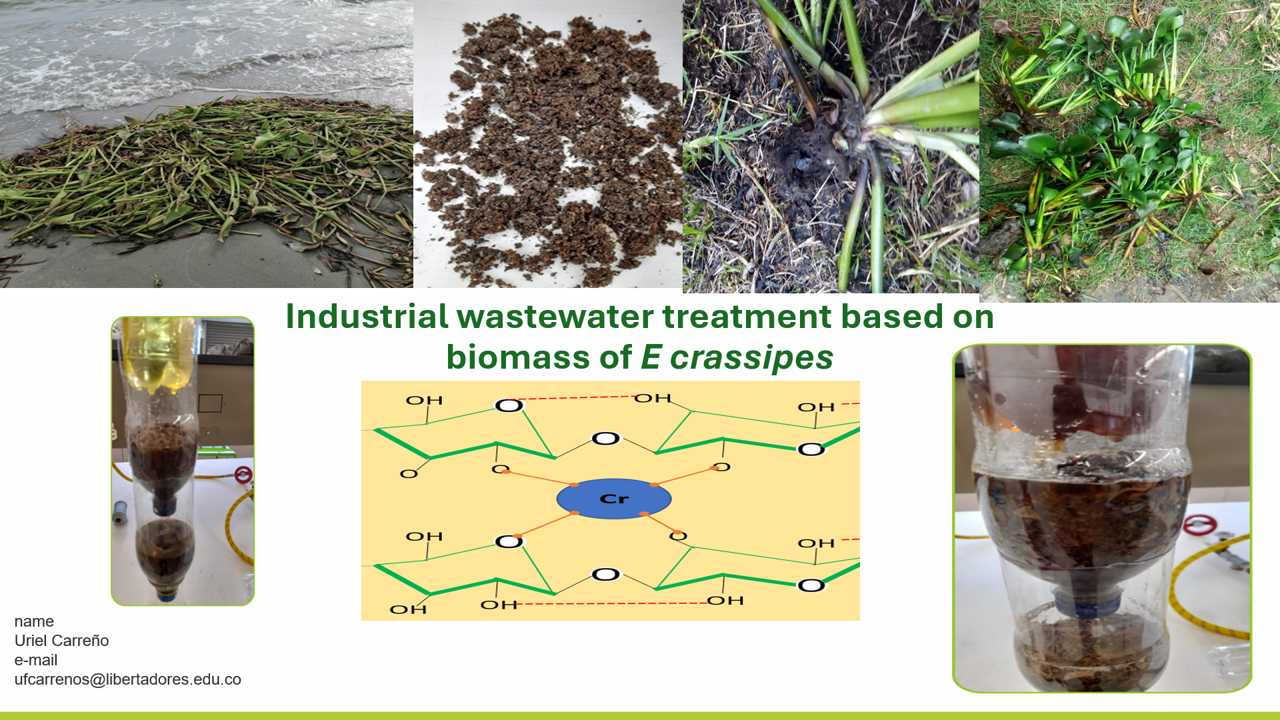
Biomass-based adsorbents have become a subject of scientific research for the treatment of chemical wastewater worldwide, owing to their ability to remove heavy metal contaminants and dyes. Pilot-scale treatment systems utilizing these biomass materials have demonstrated feasibility, driven by low costs, ease of installation, and—above all—their high heavy-metal adsorption capacities. Biomass sources such as E. crassipes have been dried and ground to prepare the cellulosic material for use in fixed-bed column treatment systems. This review article aims to examine various biomass types in depth and determine the unit costs of material development in relation to adsorption capacities. The study concludes that different biomass materials are suited to different effluents based on their pollutant loads, establishing them as an excellent resource for industrial wastewater treatment, particularly for the removal of heavy metals.
Article Details
Section
Se solicita a los autores que diligencien el documento de cesión de derechos de autor sobre el artículo, para que sea posible su edición, publicación y distribución en cualquier medio y modalidad: medios electrónicos, CD ROM, impresos o cualquier otra forma, con fines exclusivamente científicos, educativos y culturales
- La obra pertenece a UNIMINUTO.
- Dada la naturaleza de UNIMINUTO como Institución de Educación Superior, con un modelo universitario innovador para ofrecer Educación de alta calidad, de fácil acceso, integral y flexible; para formar profesionales altamente competentes, éticamente responsables y líderes de procesos de transformación social, EL CEDENTE ha decidido ceder los derechos patrimoniales de su OBRA, que adelante se detalla para que sea explotado por ésta
- El querer de EL CEDENTE es ceder a título gratuito los derechos patrimoniales de la OBRA a UNIMINUTO con fines académicos.